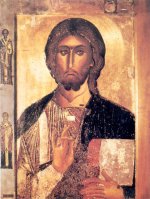
 Cyprus was
part of the Byzantine Empire for period of around 1000 years. The Byzantine art
is a continuation of the ancient Greek heritage which was dominated in the
Eastern Mediterranean.
Cyprus was
part of the Byzantine Empire for period of around 1000 years. The Byzantine art
is a continuation of the ancient Greek heritage which was dominated in the
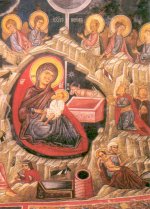
Eastern Mediterranean.The Byzantine frescoes and icons from a religious and spiritual expression of the reality existing beyond the every day world. Some Byzantine churches are completely decorated with splendid frescoes. Their purpose was to serve as an illustrative Bible for the poor and the illiterate.
The Byzantine art tradition in Cyprus has persisted throughout the centuries, and is still alive and maintained by a number of dedicated Cypriot artists. Today, their work can be seen in churches and
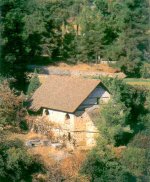 monasteries throughout the island.
The faithful Cypriot pilgrims frequent the various monasteries and churches, especially the ones believed to possess miraculous icons, Votive gifts and huge candles attest to the faith in the power prayer.
Many monasteries offer home to made specialities. The winery of Chrysoroyiatissa (near the Paphos area) produces one of the finest Cypriot wines, and the Kykko Monastery produces its famous red zivania, a locally distilled spirit.
 The nuns of Agios Irakledios,
turns out sweet marzipan confections, whilst those of Agios Minas make fragrant
honey.
The nuns of Agios Irakledios,
turns out sweet marzipan confections, whilst those of Agios Minas make fragrant
honey.Many Monasteries and convents are still lived in today by monks and nuns and are situated all over the island, particularly in the peace and quiet of the Troodos Mountains.
The most impressive and famous been the Kykko Monastery, with its splendid era
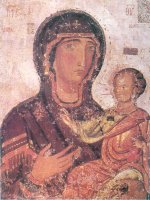 of Icons, chandeliers, silver oil lamps, wall paintings and unique ecclesiastical museum.
Especially idyllic are the numerous, now abandoned monasteries and old Byzantine churches which can also be found in most parts of the island.
One of the most important churches is Panayia Angeloktisti close to Larnaca, which houses a 6th Century life-size Byzantine mosaic of the Virgin Mary, one of the world's finest examples from the era of Emperor Justinian which directly confirms the Byzantine origin of the Ravenna mosaics to which they are related.